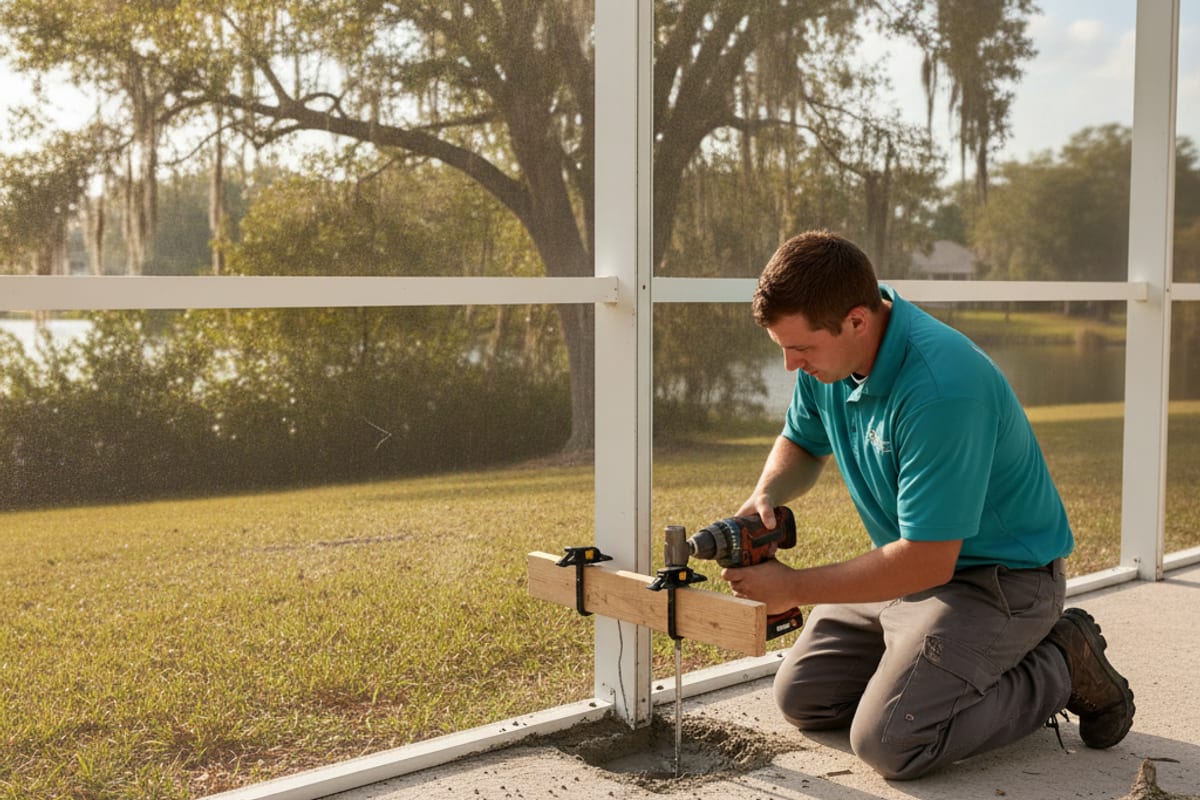
Screen enclosure repair in Polk County typically runs $250 to $900 for common panel and door damage, and $1,500 to $6,000 for structural sections after a storm. Individual replacement panels on this site are $35 to $90 each. Which end of the visit band you land on depends almost entirely on whether the frame itself moved or just the mesh tore.
That distinction is the whole ballgame. A torn panel is cheap and fast. A bent upright or a pulled anchor is a different job, and pricing it like a torn panel is how a repair fails again within a year.
What does screen repair cost in Polk County?
Common repairs, a torn panel, a damaged door, a section that popped out of its channel, run $250 to $900. Individual replacement panels are $35 to $90 each. That visit band covers the labor and material for fixing what is actually broken without touching the frame underneath it. A full-cage rescreen is a different job. Pool cage rescreening cost in Polk County is that page.
Structural repairs run $1,500 to $6,000. This is bent uprights, beams knocked out of plumb, anchors pulled loose from the deck, or a header racked out of square, usually from wind or a falling limb. It costs more because it involves straightening or replacing aluminum members, re-anchoring into sound concrete, and rescreening whatever elevation the frame work touches.
Repair, rescreen, or replace: three different jobs
These get confused constantly, and they are not the same service.
Repair fixes damage: a torn panel, a bent member, a pulled anchor. It is reactive, it is usually a single visit for the smaller items, and screen enclosure repair is the right call whenever something specific has gone wrong.
Rescreening replaces mesh that has simply aged out from UV exposure, on a frame that is otherwise sound. It is planned rather than reactive, and it typically costs $1,400 to $3,200 for a full cage. What pool cage rescreening actually costs in Polk County covers that side of it in full.
Replacement is a new structure, and it only makes sense when the frame itself is genuinely past saving, not just cosmetically tired.
What actually decides repair versus replace
A rough rule crews use here: if more than about a third of the frame is compromised, or the enclosure is already twenty-plus years old with oxidized aluminum, replacement usually wins on cost over the next five years. Under that threshold, a targeted repair is the better money, and a good crew should tell you plainly which side of that line your enclosure is on before writing an estimate.
Two specific failure points get their own posts because they come up so often. A door that will not self-close or self-latch is one of the cheapest and most consequential fixes on the whole structure, and screen door and panel replacement plus the cheapest thing wrong with most Polk County pool cages breaks down that repair specifically. Storm damage tied to an insurance claim is its own process with its own documentation rules, and pool cage storm damage and Florida insurance walks through what to photograph and what to expect from your policy before a repair crew shows up.
What a repair visit should include
A crew should assess whether uprights, beams, or the header are actually bent before quoting anything, rather than assuming a torn panel means the frame is fine. Where a section is salvageable, straightening and re-plumbing costs less than replacing the member outright. Anchors need to land back in sound concrete, not the same compromised hole that let go the first time, which sometimes means moving the anchor point or adding a footer.
Mesh gets matched to what is already on the enclosure where possible, though color will not match sun-faded panels exactly. On pool cage and screen room repairs alike, ask whether they will photograph the damage in a form your insurance adjuster can use, since that documentation matters if you plan to file a claim.
Why anchors are usually the deck’s fault, not the anchor’s
When anchors pull loose from a pool deck, the concrete at the edge is usually thin, cracked, or spalled rather than the anchor being wrong for the job. Re-setting the same anchor in the same hole buys you until the next storm, not a real fix. The honest repair is moving to sound concrete, using epoxy anchors, or adding a footer, and it is worth asking directly what a crew found in the deck before you approve the repair.
What causes most repairable damage here
Falling oak limbs are the leading cause of localized enclosure damage in the older neighborhoods around Highland City and the rest of Lakeland’s core, and it usually shows up in one or two bays rather than across the whole structure, which is exactly the pattern that makes targeted repair the right call instead of a rebuild. Lakefront properties see a different pattern. Open water gives wind a longer uninterrupted run at a cage, so storm damage around Winter Haven and Eagle Lake tends to be more widespread than what a sheltered inland lot takes in the same storm.
Where a repair keeps recurring at the same spot on the frame, that is a signal worth listening to. Fixing the same corner twice usually means something underneath, an anchor, a footing, settlement, is not being addressed, and a third repair in the same place is money spent without solving the actual problem.
How fast can repairs happen
Most panel and door repairs are a single visit. Structural work runs two to four days depending on how much of the frame is involved. After a named storm, every aluminum shop in Central Florida is triaging damage at once, and calling early in that window matters more than anything else you can control. If a section is a safety hazard, say so on the call, since that changes where the job lands in the queue.
Frequently asked questions
How much does it cost to repair a torn screen panel?
Individual replacement panels on this site are $35 to $90 each. A visit that also covers a door or a section that popped out of its channel typically runs within the $250 to $900 common-repair band, and a torn panel with an otherwise sound frame is usually at the lower end of that.
How much does structural screen enclosure repair cost after a storm?
Bent uprights, pulled anchors, and racked headers run $1,500 to $6,000 depending on how much of the frame is involved. That figure covers straightening or replacing members and re-anchoring into sound concrete.
Is it cheaper to repair or replace a damaged enclosure?
Repair, until roughly a third of the frame is compromised or the structure is twenty-plus years old with oxidized aluminum. Past that point, replacement usually costs less over the next five years than repeated repairs.
What is the difference between screen repair and rescreening?
Repair fixes specific damage to panels or the frame. Rescreening replaces mesh that has simply aged out from sun exposure on a frame that is otherwise fine. They solve different problems and price differently. Full-cage rescreen questions belong on pool cage rescreening cost in Polk County.
Does homeowners insurance cover screen enclosure repair in Florida?
It depends on the policy, and screen enclosures are commonly limited or carry a separate cap from the dwelling coverage. Read the enclosure line on your declarations page and photograph damage before any repair work starts.
Why do my anchors keep pulling out of the deck?
Usually because the concrete at the edge is thin, cracked, or spalled rather than because the anchor itself failed. Putting the same anchor back in the same spot typically fails again at the next storm.
If part of your enclosure is bent, torn, or has pulled loose from the deck, call (863) 777-5379. Most repairs are a single visit, and the walk-through that tells you which kind of repair you actually need is free.