Three-season rooms: panels, openings, tracks, and the existing cover
A three-season room is a panel system on an existing covered opening. The quote follows the panel type, how many openings, their dimensions, the tracks and seals, the roof and frame already there, drainage, ventilation, and how you expect to use the space. It does not promise a temperature, a product life, or a later conversion to a sunroom. Lakeland Outdoor Pro connects you with licensed and insured local providers and does not perform the work.
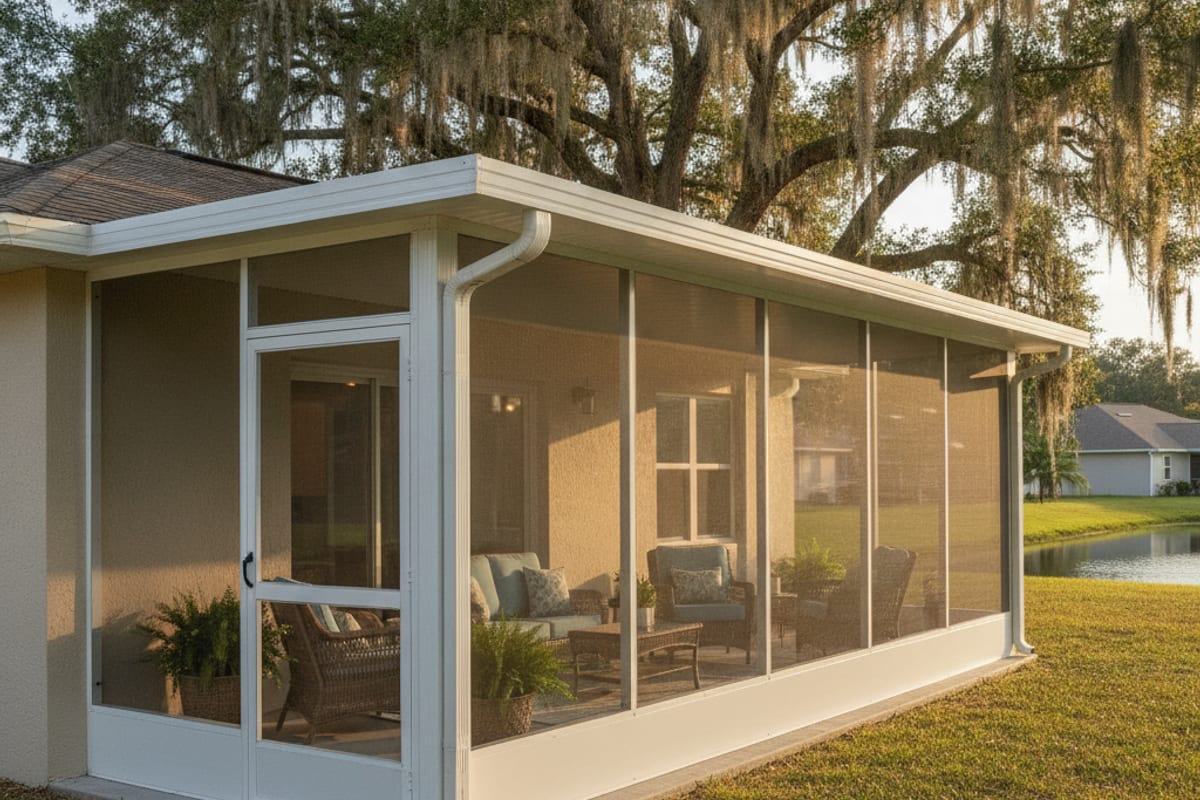
What does a provider scope on this job?
- Record the existing roof and frame before selecting a panel system
- Count openings and measure each one, including tracks and seals
- Note drainage and ventilation on the covered opening you already have
- Separate a panel enclosure from a glazed sunroom assembly
- Leave existing-frame capacity as an inspection question
- Confirm permit questions for the address, the scope, and the issuing jurisdiction
When should you request a referral?
- A screened lanai you want to close with panels on the openings you have
- Furniture or a sitting area you want behind tracks and seals, not full glass
- A cover whose roof and frame still look like they can carry a panel system
- Wind-driven rain or pollen you want to limit without changing the roof
- A use that stays a panel enclosure, not a conditioned glass room
What do homeowners ask about Three Season Room & Acrylic Window Enclosure?
What does a three-season conversion quote from?
The panel system, the number and size of openings, tracks and seals, the existing roof and frame, drainage, ventilation, and how you expect to use the room. Opening count often moves the job more than floor area. Converting a lanai that already has a solid roof is a different scope from building the cover and the panels together.
Acrylic or vinyl panels, which should I use?
That is a product-system choice for the openings you have: rigidity, how the panels stack or slide, and how you will live with tracks and seals. This page does not rank UV life, yellowing, or optical performance. Ask the provider to specify the system they are quoting and what it does on your actual openings, not a generic better-panel rule.
Will a three-season room stay comfortable in summer?
This page does not promise a temperature. Closed panels, sun, and limited ventilation can make a covered opening hotter. Many owners run panels open in warm weather so the space works as a screened room, then close them for cold or wind-driven rain. A mini-split or other mechanical work is a separate scope and a separate permit question, not a comfort upgrade included in the panels.
Do I need a permit to add panels to an existing lanai?
Confirm that for the actual address, the exact scope, and the issuing jurisdiction. Some agencies treat a panel retrofit on an existing enclosure differently from a new structure. This page does not decide that. The quote should say whether a permit is being pulled, and by whom.
Can I convert a three-season room into a sunroom later?
Do not buy the panels as a down payment on glass. A later sunroom is a different assembly, with its own support, glazing, and permit questions. The slab and frame under a panel enclosure were not automatically built for that. If a glazed room is the destination, quote that route now instead of assuming a conversion path.
Three Season Room & Acrylic Window Enclosure information organized by Polk County city
Use the city links below to open the local page for three season room and acrylic window enclosure in Lakeland & Polk County.
Open the 35 city pages for three season room and acrylic window enclosure
Need a referral for three season room and acrylic window enclosure in Polk County?
Describe the existing cover, openings, panel type, tracks and seals, or drainage and request a scope-specific quote. Lakeland Outdoor Pro connects Polk County homeowners with licensed and insured local providers and does not perform the work.