Pool cage painting: coating condition versus repair or replacement
Cage painting is a coating job only when the frame is still a coating job. The walk records visible film condition, chalking, oxidation or corrosion you can see without diagnosing it, member and fastener condition, whether screen comes off or stays protected, cleaning and drying, coating compatibility, access, and how the finish will be protected while it cures. Lakeland Outdoor Pro connects you with licensed and insured local providers and does not perform the work.
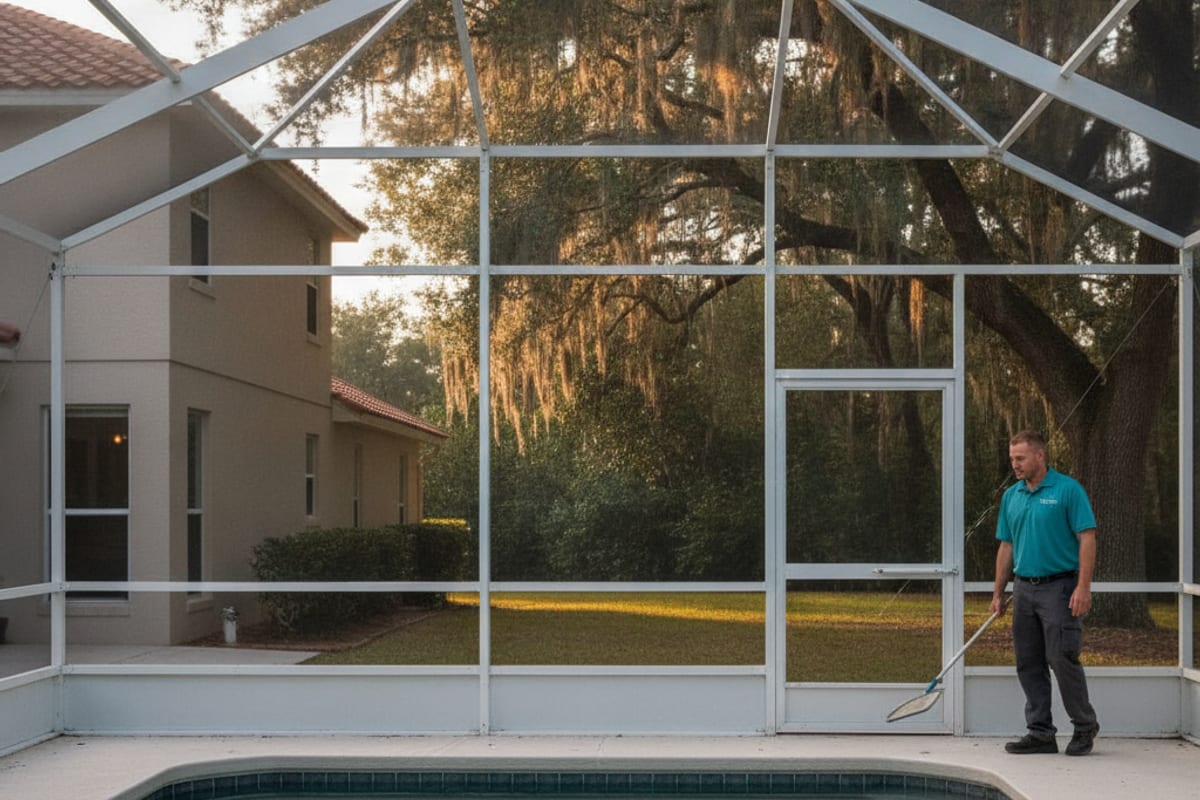
What does a provider scope on this job?
- Record visible coating condition, including chalking or film that rubs off
- Note oxidation or corrosion you can see, without calling it a structural diagnosis
- Separate recoating from member, fastener, or anchorage repair or replacement
- Ask whether screen is removed or protected, and how the deck and water are masked
- Scope cleaning, drying, and preparation to the actual coating specification
- Plan access and how the finish is protected while it cures
When should you request a referral?
- A frame whose finish looks chalky, faded, or streaked
- Visible oxidation or corrosion at fasteners or joints, with the members still in place
- A color change requested on a cage that is otherwise a coating job
- A rescreen already planned, so coating sequence has to be decided
- Members, anchors, or connections that may make paint the wrong scope
What do homeowners ask about Pool Cage Painting & Frame Restoration?
Should I paint the cage or replace it?
That follows what you can see on the members, fasteners, connections, and anchorage, not the age of the cage. Chalking and a tired film can stay a coating job. Bent members, failed anchors, or connections that have moved are repair or replacement. A licensed and insured local provider should split those findings before quoting a recoat over a frame that needs a different job.
What does chalking actually tell you?
Sherwin-Williams treats chalking as weathered paint film and supports cleaning and drying before recoating. It does not set a universal aluminum preparation recipe or a local finish life. The coating specification for the actual substrate decides what happens after that cleaning. Powder on your hand is a visible-film observation, not a diagnosis of the metal underneath.
Paint first or rescreen first?
Sequence them so new mesh is not coated and the frame can actually be reached. Removing mesh first changes access to the channels. Leaving it up means protection from overspray. That order belongs in a combined quote with masking for the deck and water. This page does not lock a single recipe for every cage.
What belongs in a coating quote?
Visible film condition, member and fastener findings, whether screen is removed or protected, the cleaning and drying step, the specified coating and its compatibility, access, masking, and how the finish is protected while it cures. Height and total frame area change access. Compare those inclusions instead of a typical-cage number.
Can I paint the cage myself?
You can try, and the limits are the same ones a provider has to quote: reaching the members, protecting the pool, deck, and mesh, cleaning and drying the film, and matching a coating to the substrate. This page is not a how-to and does not pick a product. On a tall mansard those access and masking questions are the job.
Pool Cage Painting & Frame Restoration information organized by Polk County city
Use the city links below to open the local page for pool cage painting and frame restoration in Lakeland & Polk County.
Open the 35 city pages for pool cage painting and frame restoration
Need a referral for pool cage painting and frame restoration in Polk County?
Describe visible film condition, members and fasteners, screen protection, preparation, or access and request a scope-specific quote. Lakeland Outdoor Pro connects Polk County homeowners with licensed and insured local providers and does not perform the work.