A chalked pool cage often looks worse than the aluminum is. The factory finish has gone flat and powdery. From the kitchen window the whole frame reads as tired. That appearance is what sends people looking for replacement quotes.
Appearance is not a structural inspection. Chalked coating is a finish problem until someone walks the members, joints, and anchors and finds something else.
Coating restoration versus structural work
Painting is the right conversation when the complaint is color, chalk, and staining, and the frame is still doing its job. Replacement, or screen enclosure repair first, is the right conversation when members, connections, or geometry have failed.
A crew should walk the cage before quoting either path. These findings are reasons coating will not fix the structure:
Members eaten through. Aluminum does not rust the way steel does, but it does corrode, especially at fasteners and where dissimilar metals meet. Surface corrosion at a joint can be a prep and coating problem. A member you can push a tool through is not.
Anchors failing. If the frame has worked loose from the deck in more than a spot, the problem is the connection to the slab, not the color. Paint does not reset anchorage. Settlement, storm movement, and age can all show up here. Geography does not diagnose which one you have.
The cage is out of square. A racked frame has already moved. New coating on a structure that is still shifting will split at the joints. Find why it moved before you buy a finish.
Repeated repairs at the same spot. If the same corner keeps coming back, something underneath is still wrong. A third patch plus paint is not a plan.
If none of those show up, recoating a sound frame is often the smaller job. A company that quotes a new cage without walking the existing one has skipped the step that decides the answer. When the honest read is that the structure comes down, pool cage removal in Polk County covers the demolition permit and the pool-barrier question that follows.
A new enclosure is a different product: engineered aluminum, wind design, permits, and a full install. See what a new pool screen enclosure involves for that job. Do not treat a coating quote and a new-cage quote as the same scope.
What chalk actually is
Sherwin-Williams describes chalking as powder from weathered paint film. The useful next step in that guidance is to remove the chalk by suitable washing or scrubbing, rinse, and let the surface dry completely before recoating, using a compatible finish and a primer if the system calls for one.
That is weathered coating, not a universal aluminum-oxide layer on every Polk County cage. Do not assume every frame needs the same strip, etch, and prime recipe. Sherwin-Williams surface preparation tells you to remove oil, grease, dirt, oxide, and foreign material from aluminum to the cleaning standard named for that spec. Follow the actual coating and substrate data sheet for the product on the bid. A masonry or concrete prep list is the wrong document.
Prep is still most of the job, even without a single mandatory recipe. Paint laid over loose chalk is bonded to powder. Ask what they will wash, what they will remove, what they will prime if anything, and which topcoat they are using. A crew that answers with the coating name and the prep steps is giving you something you can check. A crew that says they will clean it and spray it is giving you something too.
There is no local 8-to-15-year finish guarantee on this page. Service life follows the system you actually apply, the prep you actually do, and the exposure the cage has.
Masking is part of the coating job
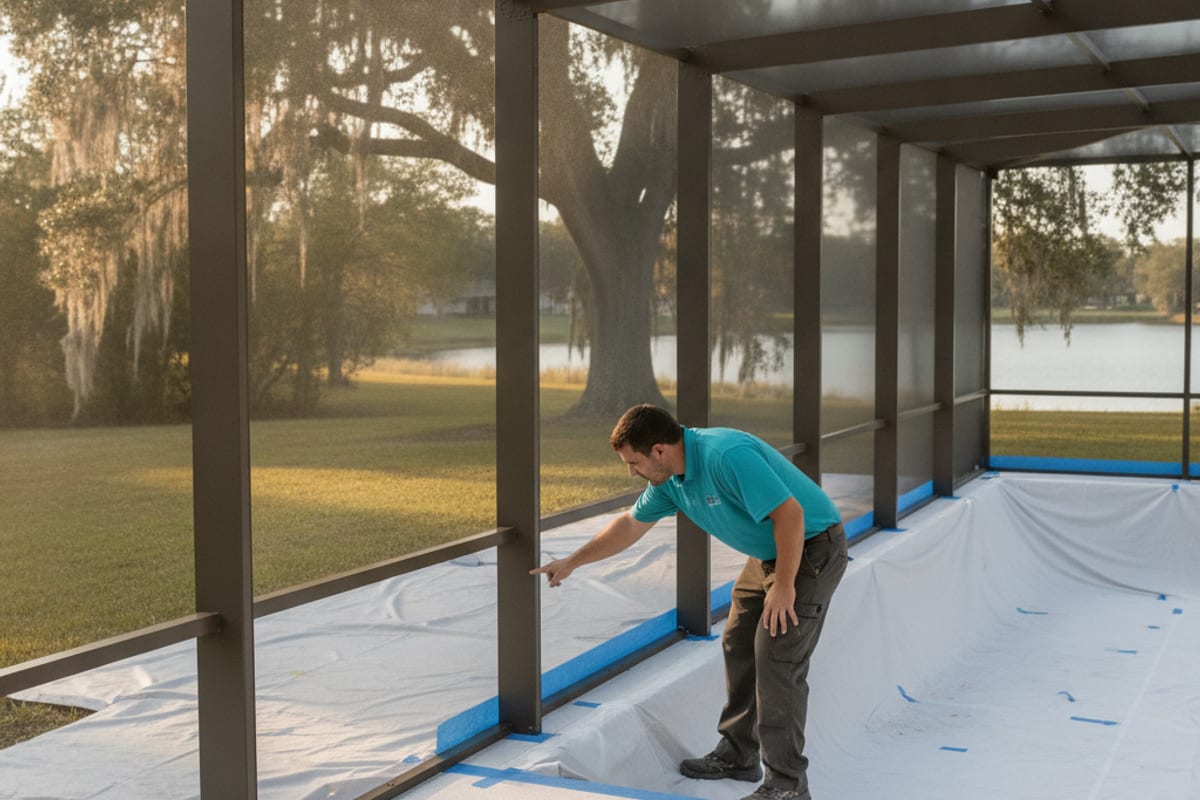
A pool cage sits over water, a deck, and usually a house wall. Overspray on any of those is a bigger problem than the color on the frame.
Masking the pool, the deck, remaining screen, and the wall is real time. It belongs on the quote. A low number that does not mention it is incomplete, not a bargain.
Height and access change the same job. A low single-story cage and a two-story mansard are not the same setup. This is not casual ladder work over a pool.
Sequence: coat first, then replacement mesh
If you are doing both a recoating and a rescreen, the coating comes first.
Overspray on brand-new mesh wastes the rescreen. Pulling the old screen first also opens the frame channels and the interior faces of the members, which is where a spray-over job leaves gaps.
Book them so one crew is not working around the other’s schedule, and so overspray has an owner. For how screen area and inclusions move the mesh number, see rescreening cost in Polk County.
Color without a county default
You can change color if the coating system allows it and the finish is compatible with the prep. There is no Polk County default from white to bronze, and there is no architecture-age rule that makes one color correct.
If your community has architectural review for exterior appearance, get a written answer on frame color before the crew shows up. That is a covenant and guideline question, not a county paint code.
A chalked, streaked frame shows in backyard photos. That is a presentation fact. It is not a promised return at resale.
Who should do the coating
The hard parts are prep, masking over water, and following the coating spec at height. Those are reasons this is typically a professional coating job, not a weekend project. Do not treat a two-story mansard as something to chase with a household ladder.
If the walk-through finds more than finish failure, stop the paint conversation and deal with the structure. Repair, rescreen, and recoating are three scopes. Doing them in the right order is most of getting a good result.
Is painting a pool cage worth it?
If the frame and anchors are sound and the complaint is the finish, recoating addresses that complaint without building a new cage. Walk the structure first. Appearance alone does not prove it is sound.
How long does a painted pool cage last?
Follow the coating manufacturer’s system, including wash, dry, and any primer that spec requires. Service life follows that system, the prep, and the exposure.
Should I paint or rescreen first?
Coat first, then install replacement mesh. Overspray ruins new screen, and pulling the old mesh gives better access to the frame.
Can I change my cage from white to bronze?
If the coating system allows a color change, yes. If an association reviews exterior appearance, get that approval before the work is scheduled. Color preference is not a county rule.
How do I know if my frame is too far gone to paint?
Look for members corroded through, anchors failing in more than a spot, a frame that has racked out of square, or the same repair coming back. A crew should walk it and tell you before quoting coating or replacement.
If the cage looks finished and you are not sure whether the aluminum is, call (863) 777-5379. Lakeland Outdoor Pro connects you with licensed and insured local crews who will walk the frame before they talk coating.