After the Storm: What to Do With a Damaged Screen Enclosure
Polk County takes hurricane wind without the surge, and screen enclosures are among the first things to go. The order you do things in affects what your policy pays.
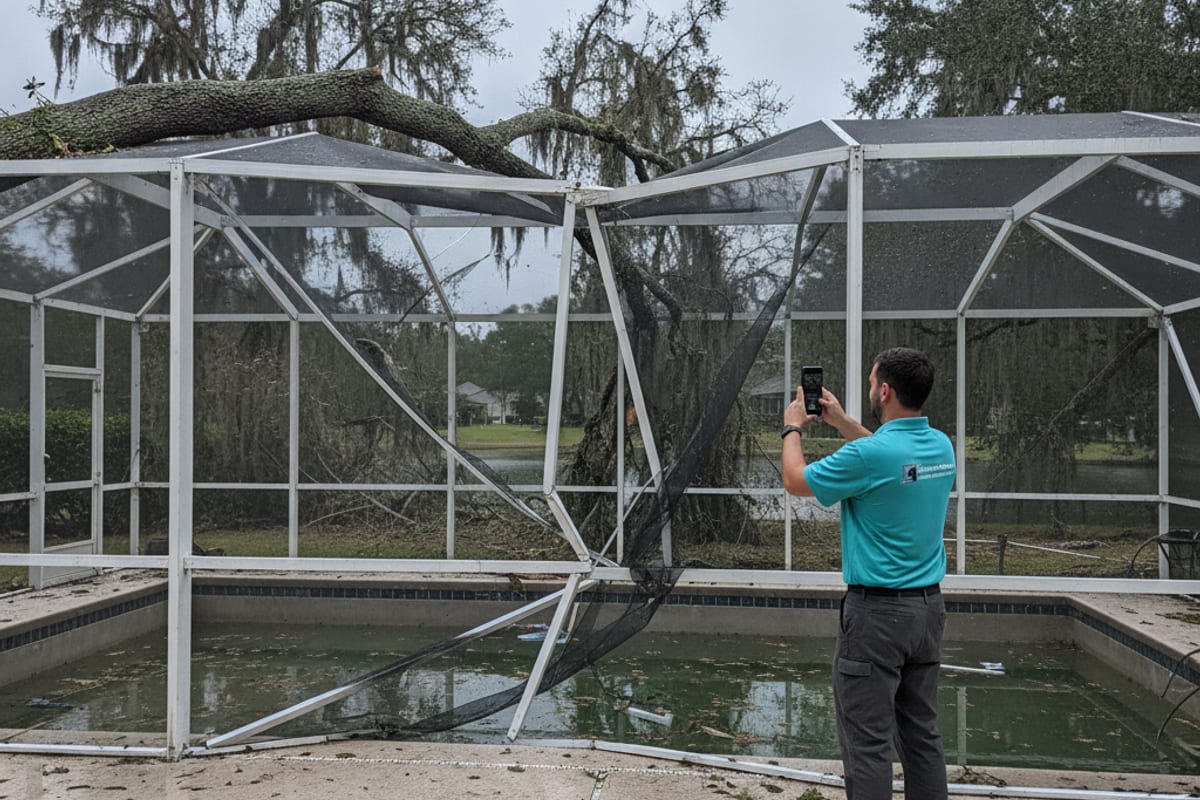
Photograph Everything Before You Touch It
This is the step people skip and regret. Before you pull a single torn panel or move a bent upright, photograph the whole enclosure from several angles, then photograph each damaged area close up, and get a shot that includes the house so the location is obvious. If a limb caused it, photograph the limb where it landed. Do the same for anything inside the enclosure that got damaged. Adjusters work from evidence, and a cleaned-up enclosure is much harder to document. If a section is an immediate safety hazard, secure it and photograph the hazard first, since reasonable emergency mitigation is normally expected rather than penalized.
Read the Screened Enclosure Line on Your Declarations Page
Screen enclosures are one of the most commonly limited items in Florida homeowners policies, and the details vary more than people expect. Many policies cover the aluminum structure but exclude the screen material itself. Many carry a separate, lower dollar limit for the enclosure than for the dwelling, and a separate deductible. Some exclude the enclosure entirely unless it was specifically scheduled. Read that line before you assume anything and before you commit to a repair scope, because it changes whether a full replacement is realistic or whether you are looking at a targeted structural repair paid mostly out of pocket.
Call Early and Say What Kind of Damage You Have
Immediately after a named storm, every aluminum shop in Central Florida is triaging and lead times stretch from days to weeks. Calling in the first few days matters more than anything else you can do, and it matters most on the county's outer edges, in Frostproof, Waverly, and the rural Ridge, where crews get to last. When you call, be specific: say whether a section is leaning or a hazard, whether the pool is unusable, and whether the property is a rental that is offline. Those details change scheduling priority at most shops. Be wary of anyone who shows up unsolicited right after a storm asking for money up front, and verify any contractor's license at myfloridalicense.com before signing.
Request a referral for this project
Lakeland Outdoor Pro is a referral network, not the contractor. Send project details to help organize a request to licensed and insured local crews.
Keep reading.
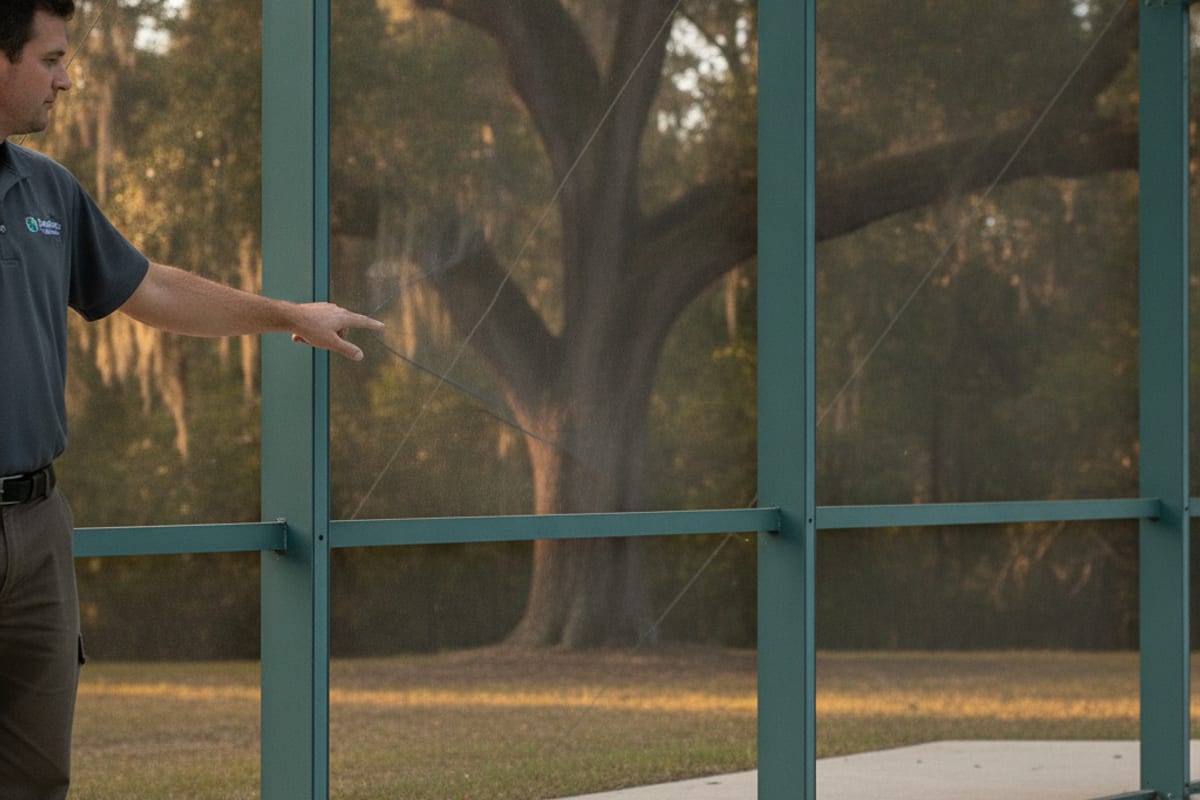
How to Tell When Your Pool Cage Needs Rescreening
Condition, actual screen area, and what a quote includes decide a rescreen. Color, tension, and spline are clues, not a calendar.
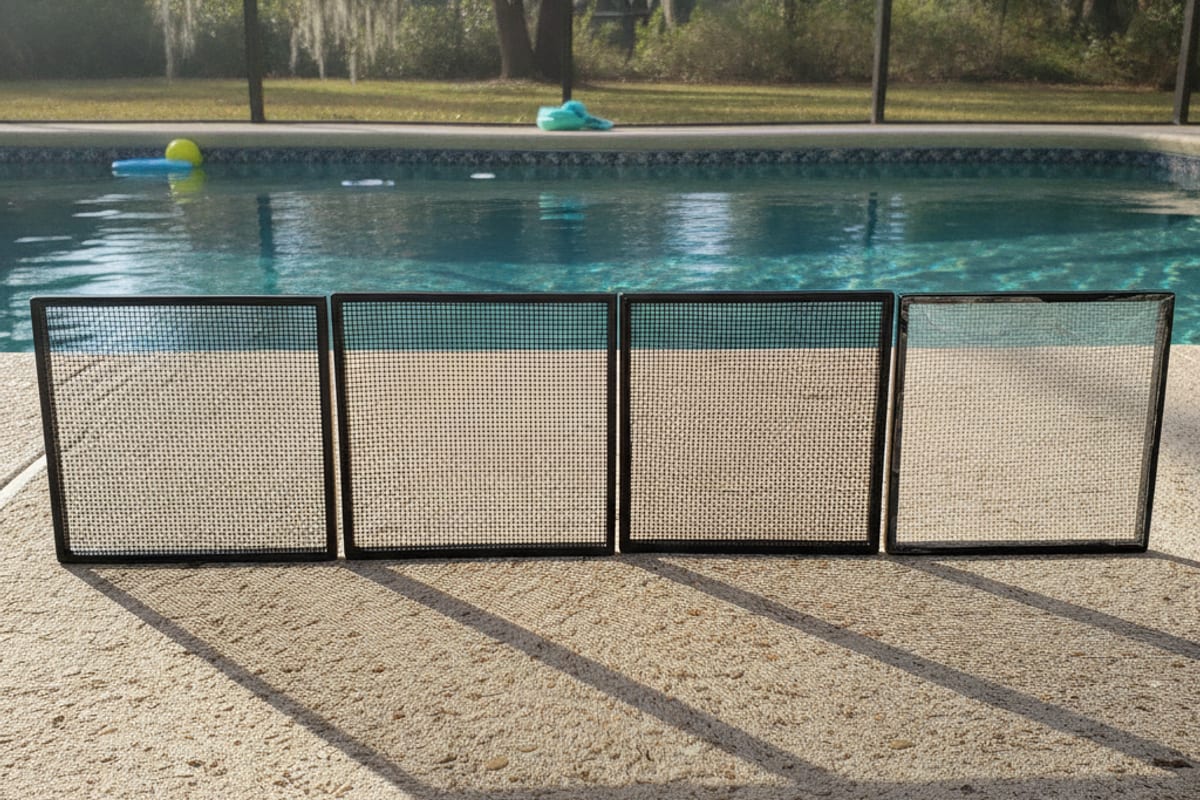
Choosing Screen Mesh for a Central Florida Enclosure
Phifer 18x14, 20x20, PetScreen, and Glas-Shield solve different jobs. Mix panels for wear and privacy, not as an insect, impact, or safety guarantee.
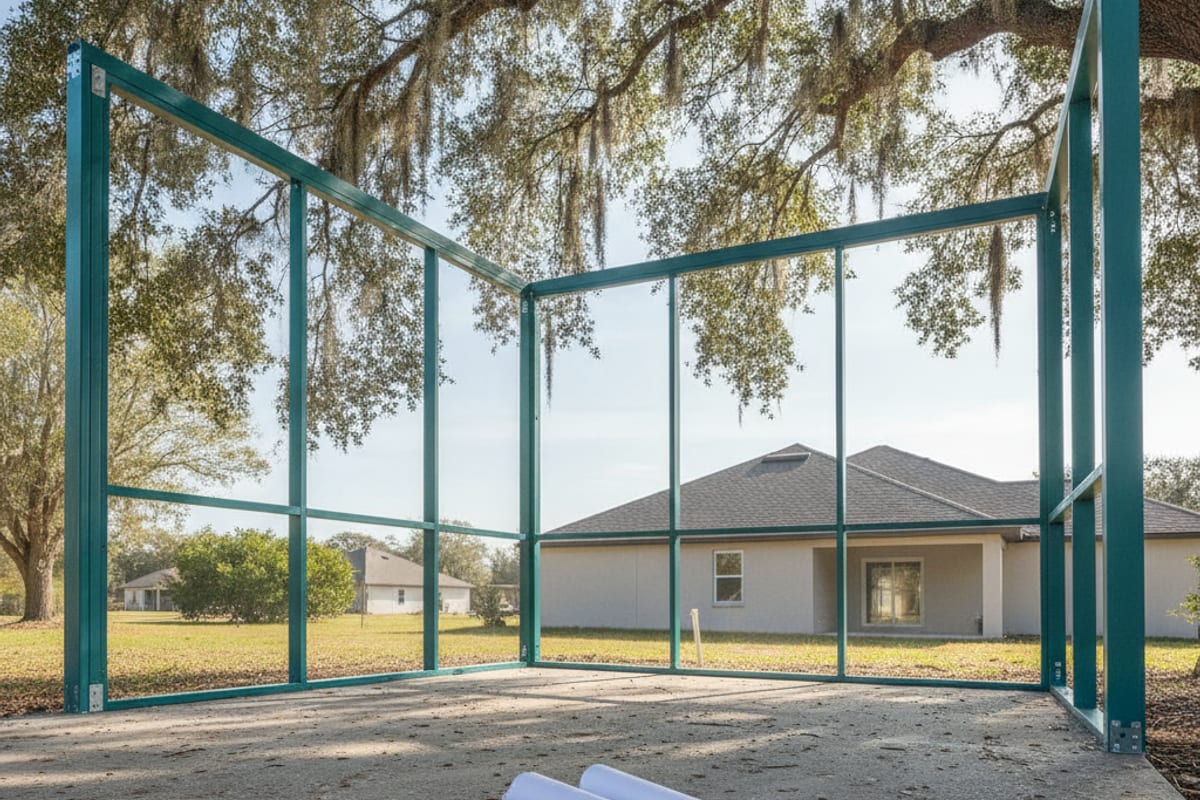
Permits, Engineering, and Wind Load in Polk County
A screen enclosure is a structure, not an accessory, and the permit package is what separates a cage that survives a storm from one that becomes debris.