How to Tell When Your Pool Cage Needs Rescreening
Condition, actual screen area, and what a quote includes decide a rescreen. Color, tension, and spline are clues, not a calendar.
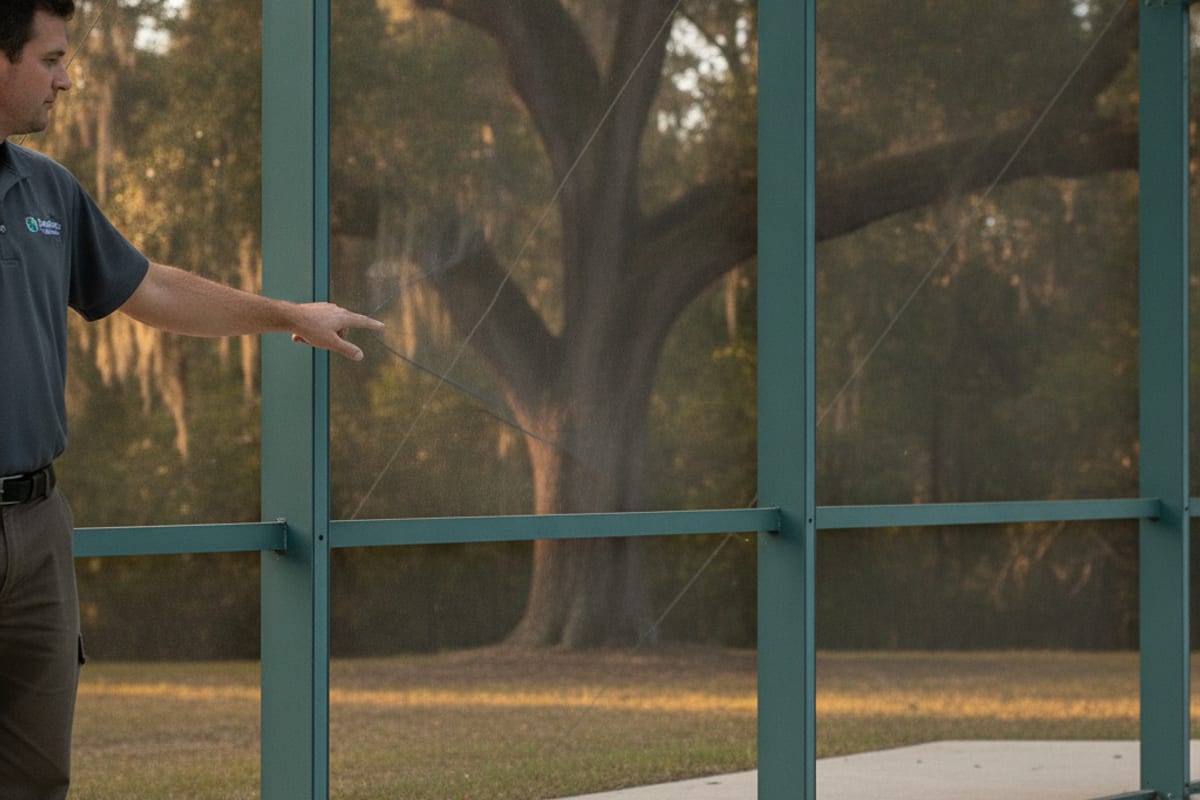
What the mesh is actually telling you
You can learn a lot from the deck without turning observations into a replacement deadline. Color is one clue: new fiberglass often reads dark against the sky, and a chalky grey or dusty cast can mean the coating has weathered. Tension is another: push a fingertip gently into a panel at chest height. Mesh that springs back is in a different condition than mesh that stays dented, ripples, or opens at a light touch. Spline is the third: walk the perimeter where mesh meets the aluminum channel. Spline that has crept out of the groove in more than a spot is a seating and shrinkage clue. Those three findings describe condition. They do not prove a single cause, a seven-to-twelve-year life, or that you must rescreen this year rather than next.
Screen area, access, and the frame underneath
The useful size number is the area of actual screen walls and roof, not the deck square footage. A tall cage over a modest deck can carry more mesh than a larger low one. Panel scope matters next: a few torn panels is a different job than a full elevation or a full cage, and new mesh will not match sun-faded mesh, so scattered patches stay visible from the deck. Height, slopes, spa bays, and landscaping grown into the frame change access. If members are bent, the cage is out of square, or anchors are working loose, new mesh is the wrong first step. Those are inspection findings on the cage you have. A sunny wall or a treeless lot is not a diagnosis.
What a quote should make comparable
Ask which panels, which fabric, and which extras are in the number. Mesh and spline only is not the same job as a bid that also washes the aluminum, hauls old screen, replaces anchors, or updates door hardware. A flat total is not unfair because it is not per square foot. It is incomplete if you cannot tell the screen area and the inclusions. On September 5, 2026, Pool Screens R Us advertised on its Lakeland page (poolscreensrus.com/lakeland/pool-screen-repair-lakeland-florida/) roof sections at $85, side sections at $60, bottom sections at $40, a $185 material and labor minimum, and a full rescreen of $2,500 to $4,500 depending on screen area, and that page describes washing, anchors, and door hardware with rescreens. That is one provider's advertised example, not our price, not a market average, and not a guaranteed bid. If coating and new mesh are both planned, coat the frame first, then install the replacement screen.
Request a referral for this project
Lakeland Outdoor Pro is a referral network, not the contractor. Send project details to help organize a request to licensed and insured local crews.
Keep reading.
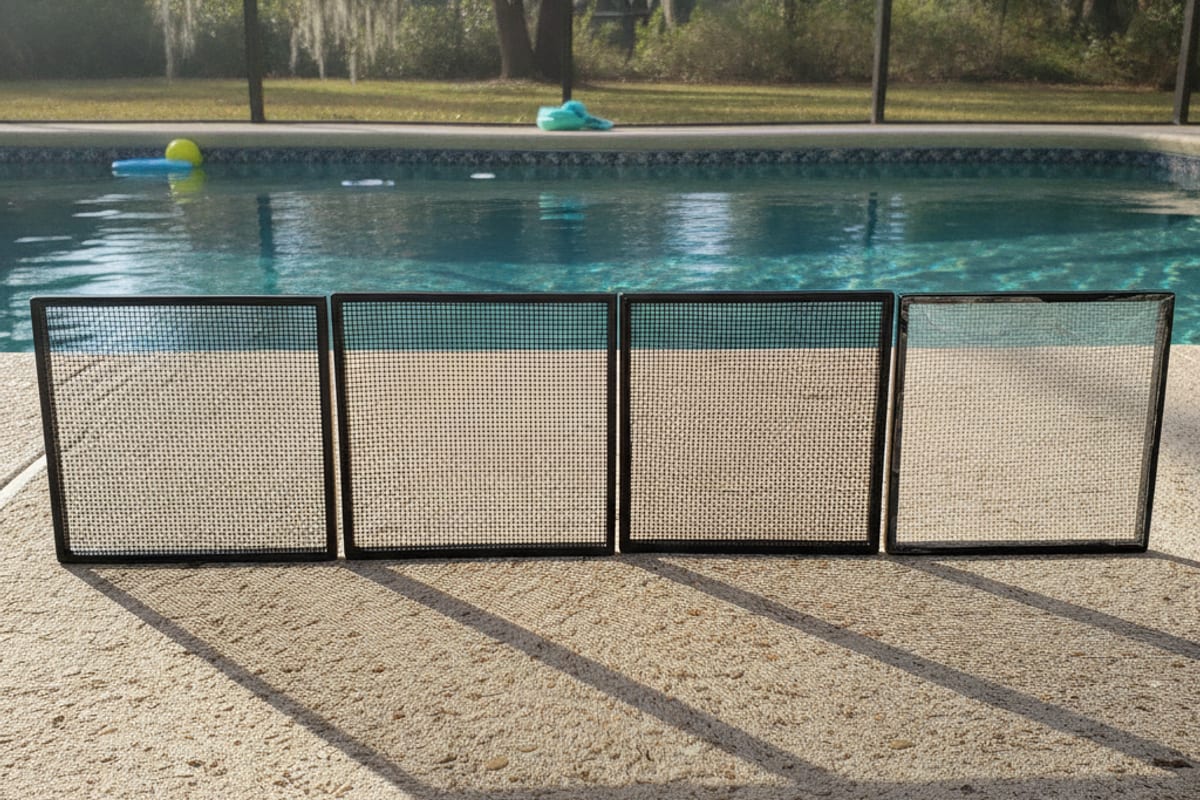
Choosing Screen Mesh for a Central Florida Enclosure
Phifer 18x14, 20x20, PetScreen, and Glas-Shield solve different jobs. Mix panels for wear and privacy, not as an insect, impact, or safety guarantee.
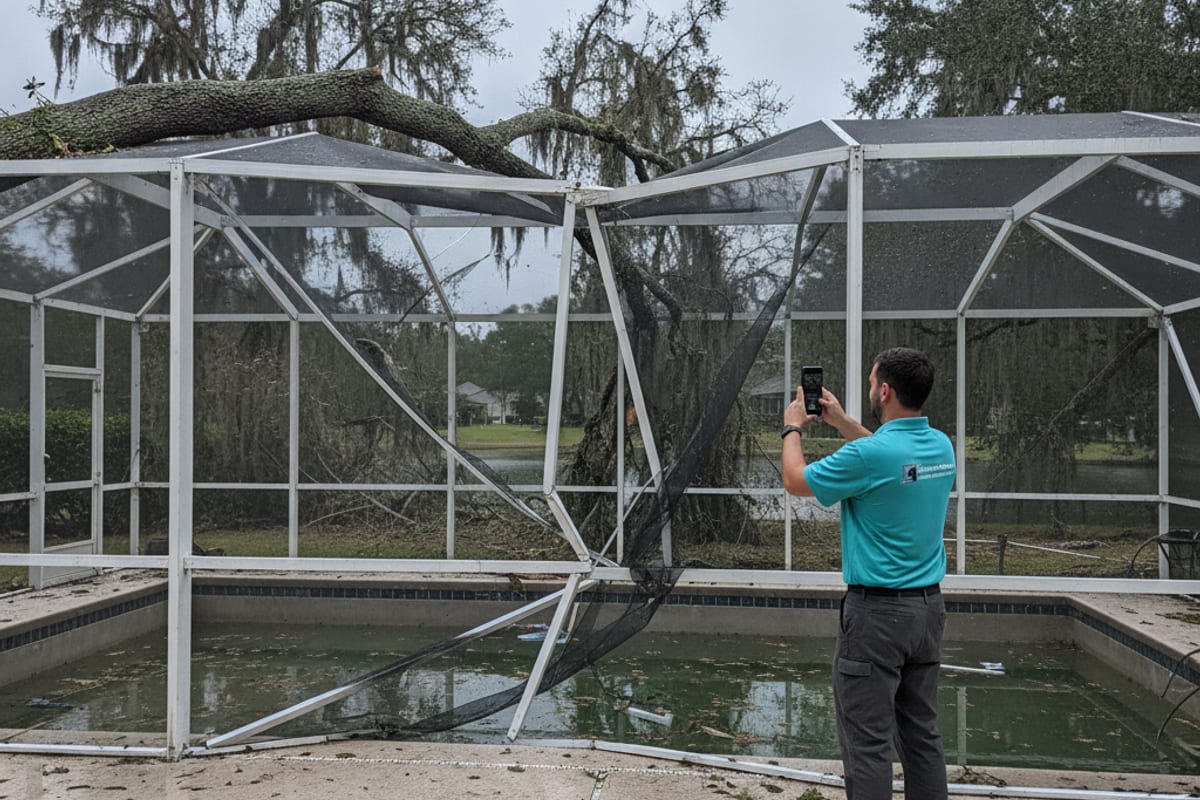
After the Storm: What to Do With a Damaged Screen Enclosure
Polk County takes hurricane wind without the surge, and screen enclosures are among the first things to go. The order you do things in affects what your policy pays.
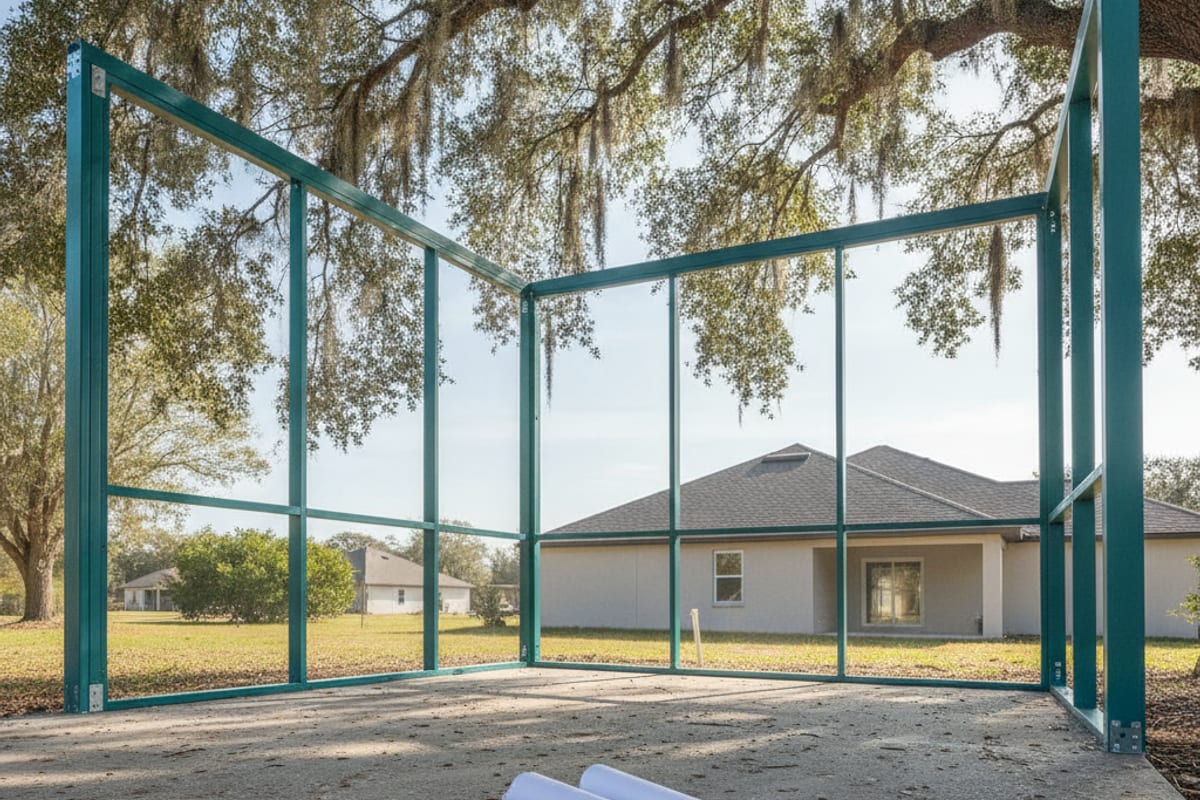
Permits, Engineering, and Wind Load in Polk County
A screen enclosure is a structure, not an accessory, and the permit package is what separates a cage that survives a storm from one that becomes debris.