Choosing Screen Mesh for a Central Florida Enclosure
Phifer 18x14, 20x20, PetScreen, and Glas-Shield solve different jobs. Mix panels for wear and privacy, not as an insect, impact, or safety guarantee.
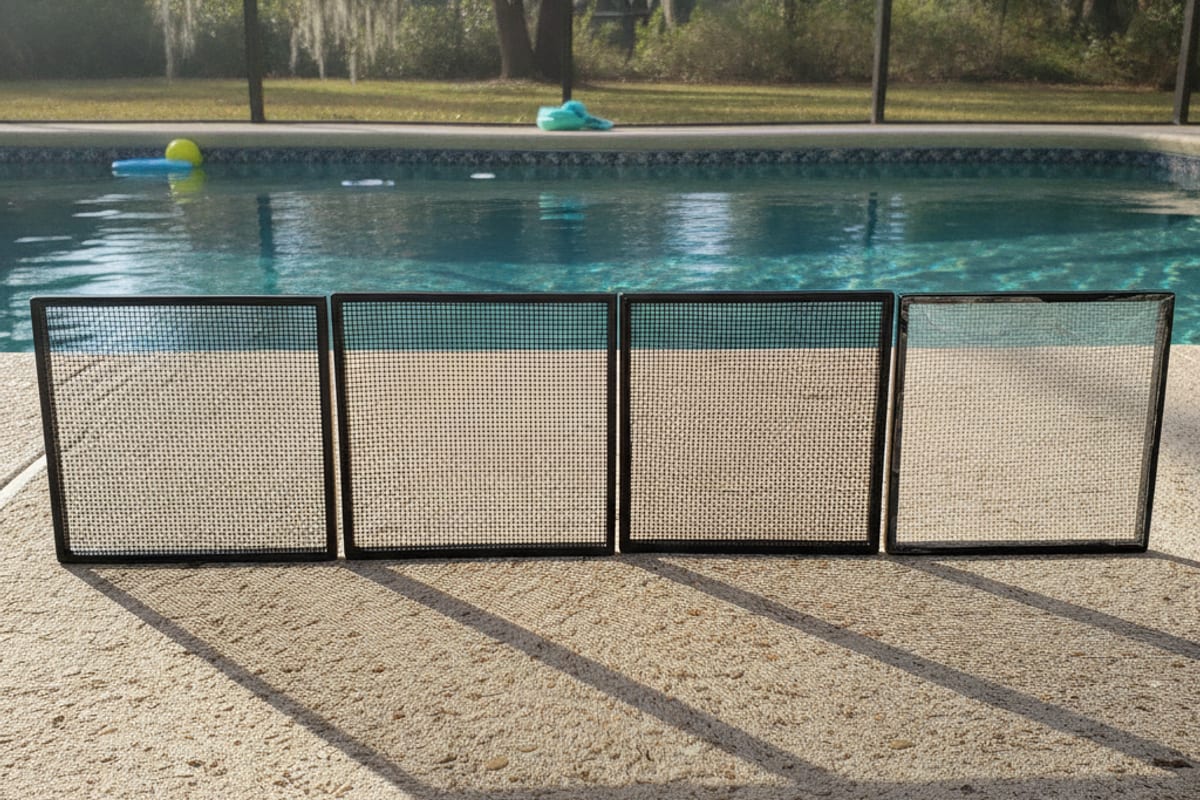
Weave, material, and what each product is for
Phifer's 18x14 pool and patio fiberglass is the usual open-weave insect screen for ordinary flying insects and wind-blown debris, and it can go on roofs and walls. Phifer's 20x20 small-insect product is a tighter weave the company describes as keeping out most tiny insects, not all of them, while still allowing breeze. Airflow and visibility change with the fabric, and people notice that change to different degrees. PetScreen is vinyl-coated polyester sold as tear- and puncture-resistant against damage by most dogs and cats. That is pet-wear resistance, not a golf-ball rating, a fall barrier, a pool safety barrier, or guaranteed animal restraint. Glas-Shield is 18x14 fiberglass with a vinyl lamination, positioned for privacy and for keeping dirt and debris off lower vertical panels. Phifer specifies it for walls, not roofs.
Selective panels, and what they cannot do
You do not have to run one fabric everywhere. PetScreen on the lower walls a dog actually leans on is a wear choice. Glas-Shield on a selected vertical panel can address a neighbor sightline or splash at an equipment pad. 20x20 on some openings is a small-insect choice for those openings only. Insects can still enter through coarser remaining panels, the roof, and door gaps, so one fine-mesh water-facing wall is not whole-cage exclusion. Mixing can reduce material compared with upgrading every panel to the most demanding fabric, and it can add labor. There is no fixed savings figure, and the channels still have to accept the mix. Get the product name by elevation in writing.
Roof, wall, and matching appearance
Open fiberglass weaves can be roof or wall infill. Glas-Shield is not roofing. PetScreen is often used on lower walls because that is where claws and leaning hit, not because a lower-only rule requires it. New mesh will not match sun-faded mesh, so a whole elevation replaced at once reads cleaner from the deck than scattered new panels. Mesh does not carry structure. If the aluminum is bent, out of square, or has anchors working loose, new screen on that frame is the wrong first job. A crew should say so before they rescreen over it.
Request a referral for this project
Lakeland Outdoor Pro is a referral network, not the contractor. Send project details to help organize a request to licensed and insured local crews.
Keep reading.
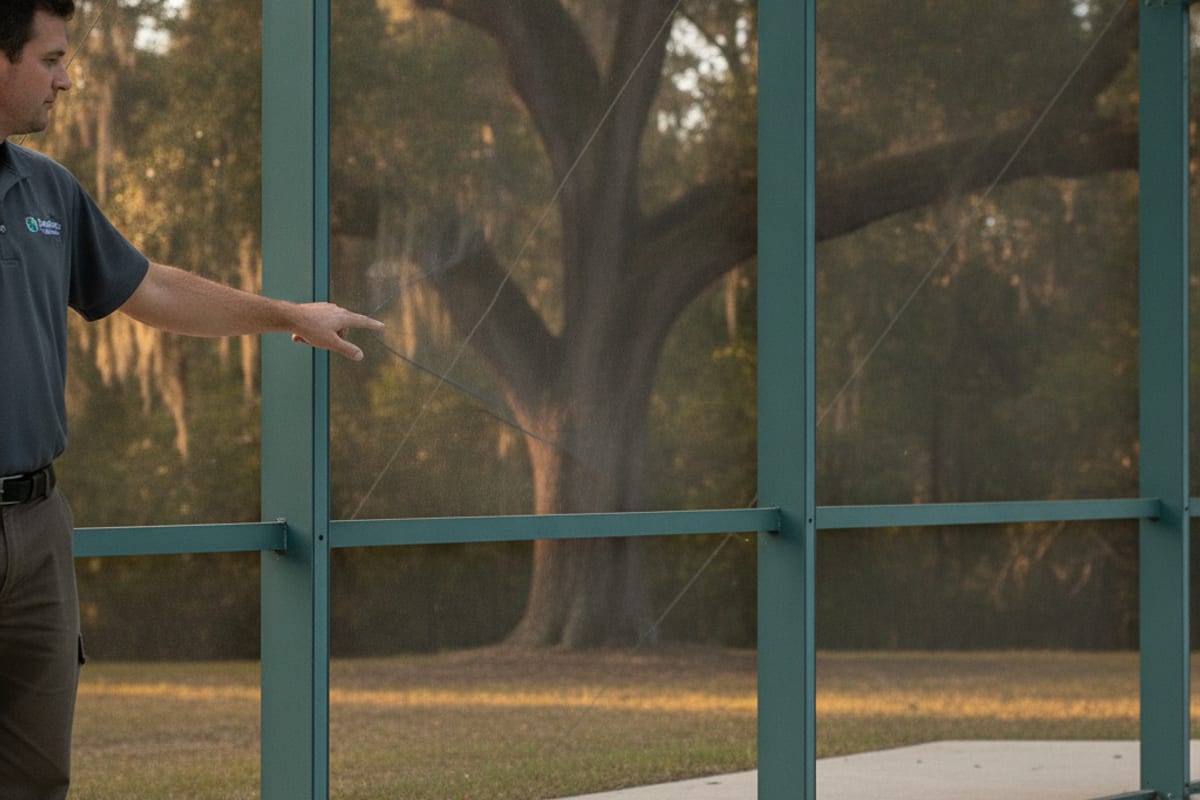
How to Tell When Your Pool Cage Needs Rescreening
Condition, actual screen area, and what a quote includes decide a rescreen. Color, tension, and spline are clues, not a calendar.
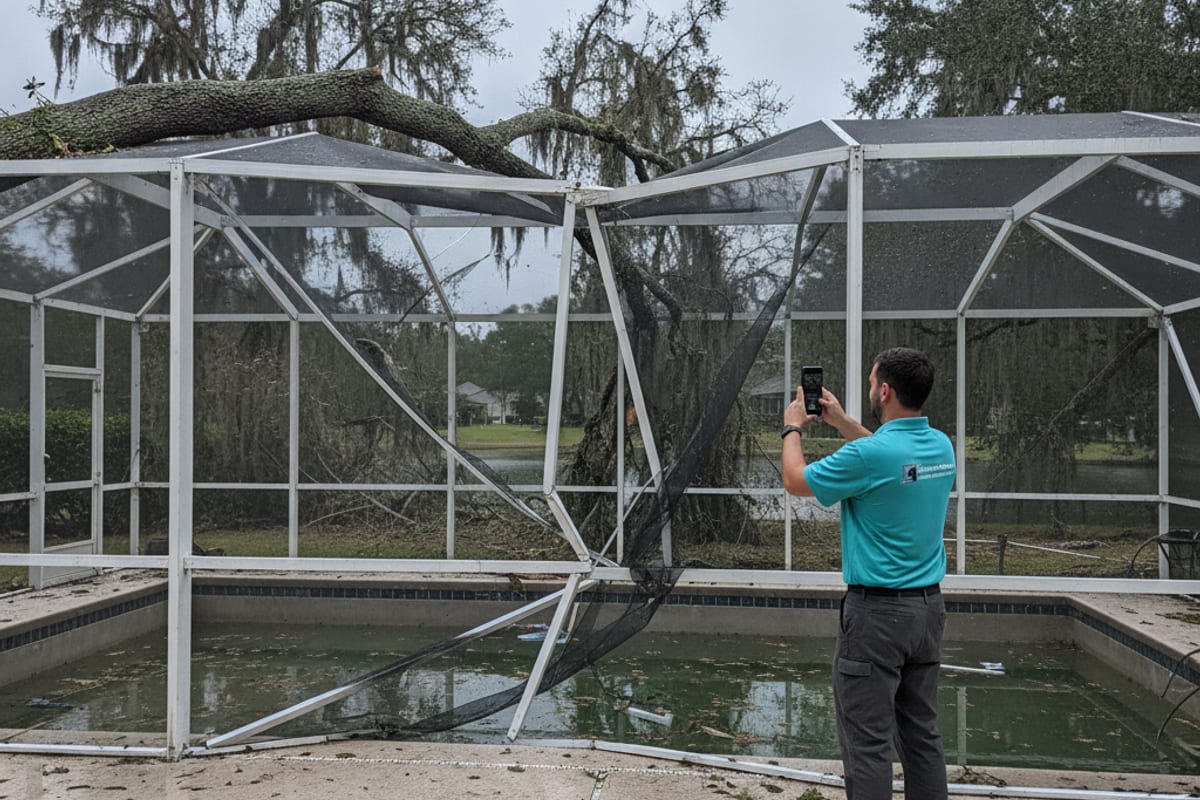
After the Storm: What to Do With a Damaged Screen Enclosure
Polk County takes hurricane wind without the surge, and screen enclosures are among the first things to go. The order you do things in affects what your policy pays.
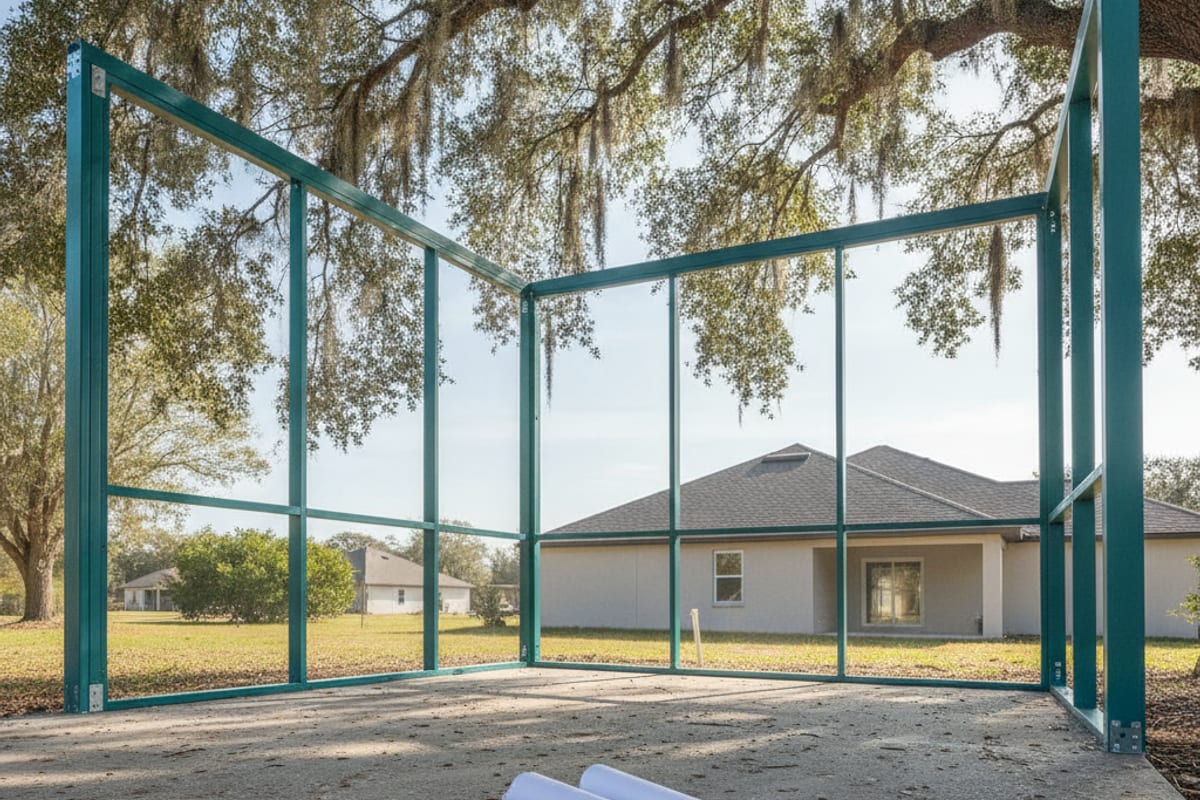
Permits, Engineering, and Wind Load in Polk County
A screen enclosure is a structure, not an accessory, and the permit package is what separates a cage that survives a storm from one that becomes debris.