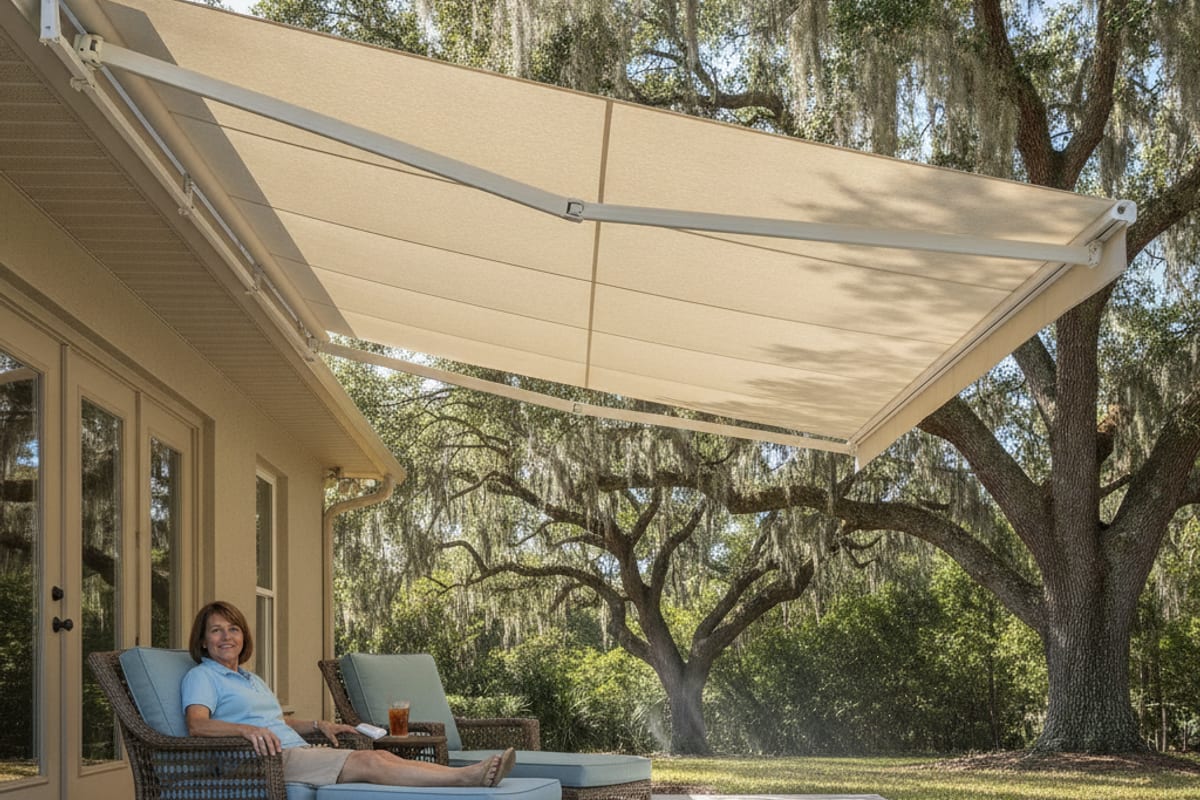
This site does not publish a verified dollar band for patio awnings. Span, motorization, fabric, and whether the frame is fixed or retractable all move the number, and none of those prices is in the claims this site is allowed to print. For the motorized-versus-manual decision on a retractable unit, use retractable patio awnings in Polk County rather than a second invented scale here. A fixed frame awning costs less than a retractable one in most quotes, but it loses the flexibility to pull it in during storms or when afternoon shade stops being useful.
Polk County heat isn’t kind to a west-facing patio from about 1 PM until sunset for half the year. An awning is what makes that space actually usable, and the kind you pick depends on how much control you want and how little maintenance you’re willing to accept.
What does a patio awning cost in Polk County?
There is no standing awning range on this site. Get the number from an on-site measure. What the quote should still show is the span, the frame type, whether it retracts, and whether a motor is included.
A small fixed awning over a rear door is a different product from a full retractable system over a large patio or deck. The frame spans the whole thing. Larger spans need heavier material, more complex engineering, and stronger motors, so depth costs noticeably more than width.
Manual retractable options cost less than motorized ones. You crank it out when the sun gets bad and crank it back when wind gusts or a thunderstorm approaches. Manual works on smaller patios where you’re close enough to the control, and plenty of Polk County homeowners choose it to avoid the motor and the rare motor repair.
A fixed frame awning, permanently extended, is usually the lowest-cost option and it shades reliably without any moving parts, but you can’t retract it if an afternoon storm rolls in or if the wind picks up, which matters here more than most places. Polk County gets fast wind and heavy afternoon thunderstorms from June through September.
Motorized versus manual, and frame type
Retractable patio awnings in Polk County is the page for that split. Motorized retractable awnings let you extend and retract from anywhere using a remote, a wall switch, or a timer. That convenience costs more than a manual crank. It’s worth it if you actually use the patio in the afternoon, since cranking a manual system every time the angle of the sun shifts gets old fast.
Frame material matters less than people think. Aluminum is standard and lightweight, which keeps installation simpler and replacement parts cheaper. Stainless steel costs more and resists corrosion better in coastal environments, but Polk County is inland far enough that aluminum holds up fine. Whatever frame you pick, make sure it’s powder coated, not just painted. The coating lasts through Polk County humidity and sun exposure way better.
Fabric choices range from basic acrylic to solution-dyed marine-grade fabrics that resist UV and mildew. The cheaper acrylic works and it fades eventually, which is fine. The premium fabric lasts longer and looks better in year five. For a standard residential patio that gets afternoon use four or five months a year, acrylic is honest math.
Installing and protecting an awning from Polk County weather
Installation takes a day or two, usually one if the connection points are already clean. The frame anchors to your house fascia and optional posts in the patio, and it all has to be properly flashed so water runs away from the house wall, not into it. Same principle as a patio cover or a carport connection.
The biggest maintenance issue isn’t the motor, it’s keeping the fabric clean. Polk County airborne pollen, dust, and moisture build up on the fabric surface, especially on the underside. Once or twice a year, you rinse it down with a soft brush and mild soap. Left alone, the buildup shades as well as the original coating but it ages the fabric faster. That said, the fabric on a retractable awning gets put away for the bad months (July through September is storm season here, and most people pull them in and leave them in), so they don’t weather as hard as a fixed patio cover that sits out all year.
Motorized systems occasionally need service on the motor or the spring tension, but it’s rare and not expensive if it happens. The wire connection between the control and the motor can fail if it’s not properly sealed where it enters the housing, so confirm the installer details that during the measure. A control that stops responding isn’t always a motor issue, it’s often just a connection that got wet.
When an awning makes sense in Polk County
A west-facing patio in this county is genuinely unusable on a sunny afternoon if nothing covers it. Lawn furniture turns into a radiator. Any patio facing west that you want to use from 2 PM to 6 PM needs some kind of shade, and an awning beats painting the concrete to try to reduce the solar heat absorbtion.
If your patio faces north or is already partly shaded by oaks or a neighboring structure, an awning is nice but not essential. Pools and pool decks matter more as a use case, since the pool crew, the loungers, and anyone barbequing benefits from the break in direct sun.
East-facing patios get less afternoon heat and can go without shade in most years, though a really clear hot day with low humidity (rare here, but it happens) still makes shade valuable.
Motorization makes the most sense if you’ll actually extend and retract it regularly. If it just lives extended from April through September, a manual system is cheaper and simpler. If you want the option to open it only on hot afternoons and leave it closed most of the time, motorization earns the premium. Think about your actual pattern: do you run outside to crank a manual awning twice a week, or do you move it if the wind starts gusting or a storm approaches.
Awning versus cover versus screen
A fixed patio cover (pan roof or insulated panel) costs more ($3,500 to $9,000) but it doesn’t need to retract, it handles rain without being put away, and it lasts for years without fabric maintenance. It’s permanent shade and weather protection. An awning is lighter duty but flexible and usually cheaper. A screen room costs more still ($6,000 to $14,000 when the roof and enclosure are built together) but it gives you weather protection plus the ability to sit outside during rain, and it works year round.
For a seasonal shading solution on a patio you use in summer afternoons, an awning is the answer. For a year-round outdoor room, a cover or a screen is the better move.
How long does installation take?
One to two days on site for a standard residential awning. A large custom motorized system might take a day and a half of install time plus an electrical connection if you want to wire the control into the home system instead of using a wireless remote.
Do not treat an awning as permit-free because it is shade. A fixed awning is a structure. Polk County’s published permit-required list starts with “Construction or demolition of any building or structure regardless of size.” Awnings are not named on the county’s permit-not-required list. Ask the issuing jurisdiction before you order. Unincorporated questions go to the Bartow Building Division at (863) 534-6080. Ask for a plans examiner. That is the county’s published line, not ours. Cities run their own departments.
Frequently asked questions
How much does a patio awning cost in Polk County?
This site does not publish a verified awning dollar band. Size, frame material, and motorization drive the price most. For motorized versus manual on a retractable unit, see retractable patio awnings in Polk County.
Is a motorized awning worth the cost?
Yes, if you’ll actually use it. The convenience of extending and retracting with a remote or wall switch beats cranking a manual system every time the sun angle shifts. On a patio where you actually spend time in summer afternoons, motorization pays for itself in use.
Do patio awnings need a permit in Polk County?
Ask the issuing jurisdiction. A fixed awning is a structure, and Polk County requires a permit for construction of any building or structure regardless of size. Retractable units are not named on the county’s permit-not-required list either. Confirm locally before you order. Unincorporated Polk: Bartow Building Division, (863) 534-6080, ask for a plans examiner.
How long does a patio awning fabric last?
Acrylic fabric typically lasts five to eight years before fading noticeably. Solution-dyed marine-grade fabric lasts longer. Retractable awnings wear slower than fixed ones because they get put away seasonally. Regular cleaning extends fabric life.
Can I install an awning myself?
Not recommended. The frame anchoring, fabric tensioning, and motorization (if you choose it) require experience. A professional install ensures it doesn’t pull away from the house during wind, a guarantee you don’t have if you DIY it.
Will an awning work on a covered patio?
Only if the existing patio cover isn’t solid or if you have open space on the side. Most people retrofit an awning onto a deck or open patio. If you already have a fixed overhead roof, an awning doesn’t add value.
If you need a custom quote on a patio awning for your specific deck or patio, call (863) 777-5379. The on-site measure is free.